
U.S. Strategy in the Western Hemisphere
Virtual Briefing Series
Thursday, March 19, 2026 | 12:00 PM – 1:00 PM ET
With the 2025 National Security Strategy placing renewed emphasis on the Western Hemisphere, Washington appears poised to engage more actively in Latin America than at any time in the past three decades, prioritizing challenges such as migration, transnational crime, and growing geopolitical competition with China. At the same time, several nations, including Brazil, Colombia, Costa Rica, Haiti, and Peru, are preparing for presidential elections in 2026, with analysts anticipating continued political polarization.
What are the political and economic implications of this strategic shift for Latin American countries during a new electoral cycle? How are governments across the region responding to Washington’s evolving policy approach? Could a renewed U.S. focus on the hemisphere generate new flows of investment and economic engagement? And what are the implications of Washington getting distracted by other foreign policy priorities?
Join us on Thursday, March 19th, from 12 PM to 1 PM ET for an insightful virtual discussion that will examine how the Trump administration may seek to reassert U.S. influence in the region, and how heightened political and economic volatility, as well as an upcoming Latin American electoral cycle may impact this strategy. This conversation will feature Mr. Jason Marczak, Vice President and Senior Director at the Atlantic Council’s Adrienne Arsht Latin America Center and Dr. Monica de Bolle, Macroeconomist and Senior Fellow at the Peterson Institute for International Economics.
COULDN’T ATTEND OUR EVENT? Don’t worry. You can watch it below
SPEAKERS:
Dr. Monical de Bolle
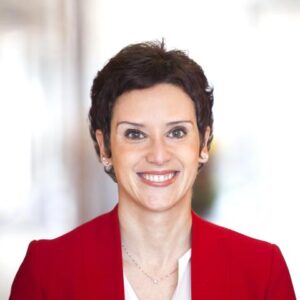 Monica de Bolle, senior fellow at the Peterson Institute for International Economics since January 2017, is the host of Policy for the Planet, a podcast about economics, public health, and climate adaptation. De Bolle is a former director for Latin American studies and emerging markets at the School of Advanced International Studies at Johns Hopkins University and was a nonresident senior fellow at the Institute between March 2015 and January 2017.
Named as “Honored Economist” in 2014 by the Order of Brazilian Economists for her contributions to the Brazilian policy debate, de Bolle focuses on macroeconomics, foreign exchange policy, monetary and fiscal policy, trade and inequality, financial regulation, and capital markets. During the COVID-19 pandemic, she has also expanded into public health research and has specialized in immunology, genetics, and biochemistry at Harvard Medical School. De Bolle obtained an advanced graduate degree in infectious diseases and human immunology at Georgetown University in 2022.
Prior to joining the Institute, de Bolle was professor of macroeconomics at the Pontifical Catholic University of Rio de Janeiro, as well as managing partner of Galanto | MBB Consultants, a macroeconomics advisory firm. She was also a director of the Institute for Economic Policy Research (IEPE/Casa das Garças), a prestigious think tank based in Rio de Janeiro, Brazil, and an economist at the International Monetary Fund.
De Bolle has authored and coauthored a number of books on the global economy and Brazil’s policy challenges, including How to Kill the Blue Butterfly: A Chronicle of the Dilma Era (2016), The State of the World Economy, Challenges and Responses: Essays in Honor of Pedro S. Malan (2014), The Future of Brazilian Manufacturing: The Deindustrialization Debate (2013), New Dilemmas in Economic Policy (2011), Financial Regulation Reform in the US: New Global Architecture and the Brazilian Regulatory Context (2009), and How to Respond to the Global Financial Crisis? Economic Policies for Brazil (2009).
Her views on Brazil’s economy and economic policy have been published widely by the international and Brazilian media. She contributes regularly to major Brazilian newspapers Exame, O Globo and O Estado de São Paulo.
De Bolle obtained her BA in economics from the Pontifical Catholic University of Rio de Janeiro and holds a PhD in economics from the London School of Economics and Political Science.
Mr. Jason Marczak
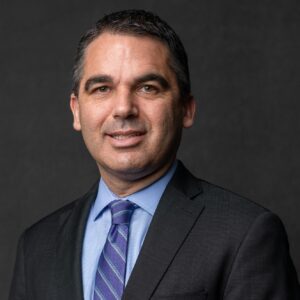 Jason Marczak is vice president and senior director at the Atlantic Council’s Adrienne Arsht Latin America Center. He joined the Council in 2013 to launch the center and set the strategic direction for its work. Marczak has twenty-five years of expertise in regional economics, politics, and development, working with high-level policymakers and private-sector executives to shape public policy.
Under his leadership, the Latin America Center delivers constructive, results-oriented solutions to advance hemispheric prosperity and is a regular venue for heads of state, cabinet-level officials, and other public- and private-sector leaders to build consensus on regional priorities and the broader global linkages. He recently co-authored a strategy for US engagement with the region, co-edited a book on the future of the US-Colombia relationship, and led groundbreaking work on the economic gains of reducing wait time at the US-Mexico border. In 2021, he led the establishment of a Caribbean Initiative at the Atlantic Council. Under Marczak’s direction, the Center has achieved consistent annual growth both in scale and scope while advancing a global vision for its select lines of geographic and thematic programming.
Marczak is an adjunct lecturer at Florida International University’s Steven J. Green School of International and Public Affairs, where he teaches on Mexico and Central America. Prior to that, he taught for seven years at the George Washington University’s Elliott School of International Affairs. He was previously director of policy at the Americas Society/Council of the Americas where he worked closely with US and global business executives and was cofounder and senior editor of Americas Quarterly magazine. In 2003, he joined Partners of the Americas to advance work on civil-society engagement in the Summits of the Americas. Marczak held positions at the National Endowment for Democracy and as a legislative aide in the office of then US Representative Sam Farr (D-CA) with a portfolio including trade and foreign affairs.
Marczak frequently provides English- and Spanish-language media commentary and has testified before the US Senate Committee on Foreign Relations and the US House Committee on Foreign Affairs. In 2022, he was invited by the House Financial Services Committee to join a congressional delegation in Barbados and present work to nearly a dozen Caribbean heads of government. In 2023, on the occasion of the ten-year anniversary of the Adrienne Arsht Latin America Center, Marczak was presented with the Visionary Leadership Award. He received a master’s degree from the Johns Hopkins University Paul H. Nitze School of Advanced International Studies and a bachelor’s degree from Tufts University. Marczak is a lifetime member of the Council on Foreign Relations.
OUR VIRTUAL BRIEFINGS ARE OPEN AND FREE FOR PEOPLE AROUND THE WORLD
Apply today to enjoy all exclusive briefings with high-profile speakers
Image credit: Pixabay
We are trying our best to keep our community informed about foreign affairs, and we would appreciate if you can support us to keep this virtual briefing series going. No amount is too small.