American Diplomacy Today and for the Next 250 Years
America 250 Virtual Briefing Series
Thursday, September 17, 2026 | 3:30 PM – 4:30 PM ET
As the United States approaches its 250th anniversary, American diplomacy faces important questions about its future. From relations with allies and adversaries to economic statecraft and the role of career diplomats, how will the United States navigate a changing international landscape?
What can the history of American diplomacy tell us about the challenges ahead? How can the United States adapt its diplomatic institutions and priorities to meet those challenges, and what might American engagement with the world look like over the next 250 years?
Join us on Thursday, September 17th from 3:30 PM to 4:30 PM ET for a discussion with John Dinkelman, President of the American Foreign Service Association; Dr. Jessica Tuchman Mathews, Distinguished Fellow and former President of the Carnegie Endowment for International Peace; and Professor Jay Sexton, Director of the Kinder Institute on Constitutional Democracy at the University of Missouri.
COULDN’T ATTEND OUR EVENT? Don’t worry. You can watch it below
NOT YET A NETWORK 20/20 MEMBER?
Apply today to enjoy all exclusive briefings with high-profile speakers
Mr. John Dinkelman
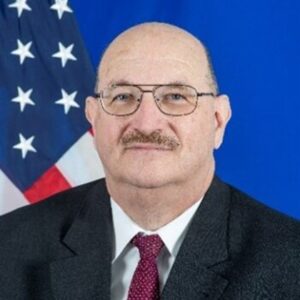
John Dinkelman assumed his duties as president of the American Foreign Service Association (AFSA) on July 15, 2025, after a distinguished 37-year career with the U.S. Department of State. At the time of his election as AFSA president, he was serving as diplomat-in-residence at Howard University.
Throughout his career, Mr. Dinkelman held numerous leadership roles, including acting assistant secretary for administration; deputy assistant secretary for logistics management; chief of staff in the Bureau of Administration; and regional executive director for the Bureau of Western Hemisphere Affairs. He also served as director of the Office of Caribbean Affairs in the Bureau of Western Hemisphere Affairs.
His overseas assignments included service as chargé d’affaires at U.S. Embassy Nassau, the Bahamas, and as principal officer at U.S. Consulate Nogales, Mexico. An “Army brat,” Mr. Dinkelman grew up in various locations around the world. He has a deep connection to Provo, Utah, where he earned his degree from Brigham Young University.
He and his wife, Elizabeth—a professor of mathematics—are the parents of three adult children.
Dr. Jessica Tuchman Mathews
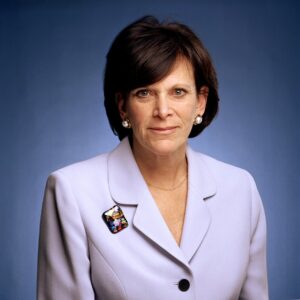
Jessica Tuchman Mathews is a distinguished fellow at the Carnegie Endowment for International Peace. She served as Carnegie’s president for 18 years. Before her appointment in 1997, her career included posts in both the executive and legislative branches of government, in management and research in the nonprofit arena, and in journalism and science policy.
She was director of the Council on Foreign Relations’ Washington program and a senior fellow from 1994 to 1997. While there she published her seminal 1997 Foreign Affairs article, “Power Shift,” chosen by the editors as one of the most influential in the journal’s seventy-five years.
From 1982 to 1993, she was founding vice president and director of research of the World Resources Institute, an internationally known center for policy research on environmental and natural resource management issues.
She served on the Editorial Board of the Washington Post from 1980 to 1982, covering arms control, energy, environment, science, and technology. Later, Mathews wrote a popular weekly column for the Washington Post that appeared nationwide and in the International Herald Tribune.
From 1977 to 1979, she was director of the Office of Global Issues at the National Security Council, covering nuclear proliferation, conventional arms sales, and human rights. In 1993, she returned to government as deputy to the undersecretary of state for global affairs. Earlier, she served on the staff of the Committee on Energy and the Environment of the Interior Committee in the U.S. House of Representatives.
Mathews is a member of the Harvard Corporation, the senior governing board of Harvard University. She has served as a trustee of leading national and international nonprofits, including the Nuclear Threat Initiative, Radcliffe College, the Inter-American Dialogue (co-vice chair), four foundations (the Rockefeller Foundation, Rockefeller Brothers Fund, the Century Foundation, and the Joyce Foundation), and the Brookings Institution. She co-founded the Surface Transportation Policy Project, has served on study groups at the National Academy of Sciences, and is an elected fellow of the American Philosophical Society. Since 2001 she has served as a director of SomaLogic, a leading biotech firm in the breakthrough field of proteomics. She is also a director of HanesBrands Inc. and a member of the governing board of the Stockholm International Peace Research Institute.
Mathews has published widely in newspapers and in foreign policy and scientific journals, and has co-authored and co-edited three books. She holds a PhD in molecular biology from the California Institute of Technology and graduated magna cum laude from Radcliffe College.
Professor Jay Sexton
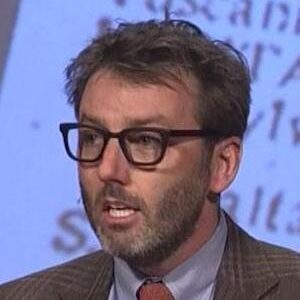
Jay Sexton is the Rich and Nancy Kinder Chair of Constitutional Democracy, Professor of History, and Director of the Kinder Institute.
A native of Salina, Kansas, Sexton returned to the Midwest to the University of Missouri in 2016 after spending the better part of two decades at Oxford University in England. He started in Oxford as a grad student Marshall Scholar and worked his way up to being Director of the Rothermere American Institute (RAI) and, upon his departure, being elected a Distinguished Fellow of the RAI and an Emeritus Fellow of Corpus Christi College.
Sexton specializes in the political and economic history of the nineteenth century. His research situates the United States in its international context, particularly as it related to the dominant global structure of the era, the British Empire. His most recent book, A Nation Forged by Crisis: A New American History (Basic Books, 2018), argues that international forces have shaped the course of U.S. history during its greatest moments of transformative change.
His other books include Debtor Diplomacy: Finance and American Foreign Relations in the Civil War Era, 1837-1873 (Oxford, 2005; 2nd ed. 2014) and The Monroe Doctrine: Empire and Nation in Nineteenth-Century America (Hill and Wang, 2011). He also has published four major collaborative projects: The Global Lincoln (co-edited with Richard Carwardine, Oxford, 2011); Empire’s Twin: U.S. Anti-Imperialism from the Founding to the Age of Terrorism (co-edited with Ian Tyrrell, Cornell, 2015); Crossing Empires: Taking U.S. History into Transimperial Terrain (co-edited with Kristin Hoganson, Duke, 2020); and, also co-edited with Kristin Hoganson, The Cambridge History of America in the World: Vol. 2, 1820-1900.
Currently, Sexton is at work on a book that explores how steam infrastructure conditioned the connections and relations between the United States and the wider world in the second half of the nineteenth century.
Sexton enjoys working with enterprising students, undergrad or grad, who set their own intellectual agenda. When he is not reading or talking history, he is cheering for KC sports teams and following British politics.
THIS SESSION IS FREE AND OPEN TO THE PUBLIC
NOT YET A NETWORK 20/20 MEMBER?
Apply today to enjoy all exclusive briefings with high-profile speakers
Image Credit:Image by Wynn Pointaux from Pixabay