Crude Power: The U.S. Pivot to Oil and the Future Energy Mix
Virtual, Open to the Public
Thursday, February 26, 2026 | 12:00 PM – 1:00 PM PM ET
The year 2026 kicked off with a massive shake-up in U.S. foreign and energy policy. Through bold action, the Trump administration is signaling its conviction that global power lies in controlling physical energy reserves, such as those in Venezuela, rather than adhering to international climate treaties. By planning to invest billions into fixing Venezuela’s oil infrastructure, the U.S. aims to flood the market with cheap crude oil and push prices down to $50 a barrel. This strategy is designed to weaken foreign oil monopolies in the Western Hemisphere, starve rival world powers of export revenues, and collapse the energy lifelines that have sustained ideologically aligned neighbors of Venezuela. What will be the strategic impact of this situation on countries like China, Russia, Iran, and Cuba? What are the costs and benefits for private oil companies investing in a market defined by a history of expropriation? How will cheap crude impact the global energy transition and the growing power demands of the AI revolution?
Join us for a virtual discussion on the vision for the U.S. energy strategy and how that fits into the future global energy mix on Thursday, February 26, from 12 PM to 1 PM ET, featuring Dr. Caroyln Kissane, Associate Dean of the graduate programs in Global Affairs and Global Security, Conflict, and Cybercrime at New York University’s Center for Global Affairs, Robert McNally, Founder and President of Rapidan Energy Group and White House energy advisor to President George W. Bush and Dr. Francisco Monaldi, Director of the Latin America Energy Program at Rice University’s Baker Institute.
COULDN’T ATTEND OUR EVENT? Don’t worry. You can watch it below
SPEAKERS:
Dr. Caroyln Kissane
 Dr. Caroyln Kissane, Associate Dean of the graduate programs in Global Affairs and Global Security, Conflict, and Cybercrime at New York University’s Center for Global Affairs.
Dr. Carolyn Kissane serves as the Associate Dean of the graduate programs in Global Affairs and Global Security, Conflict, and Cybercrime at New York University’s Center for Global Affairs (CGA), where she is also a Clinical Professor. She teaches graduate-level courses on the geopolitics of energy, comparative energy politics, resource security, and climate and energy transitions.
She is the Founding Director of the SPS Energy, Climate Justice, and Sustainability Lab. Kissane’s research and teaching explore the intersections of energy, policy, and security across global and regional contexts.
Kissane is the author of the weekly Substack newsletter Energy Common Sense, which offers analysis and commentary on the evolving dynamics of energy, climate, and geopolitics. She is also a contributor to Barron’s, Project Syndicate, and Foreign Affairs, where her essays examine the political economy of energy, electricity demand, and global energy security.
She is a lifetime member of the Council on Foreign Relations, a member of the National Committee on U.S.–China Relations, a Non-Resident Fellow of the Payne Institute at the Colorado School of Mines, a Senior Fellow at the George H. W. Bush Foundation for U.S.–China Relations, and a Distinguished Fellow at the University of Piraeus. She serves on the board of the New York Energy Forum and is a Senior Advisor at Ridgewood Infrastructure.
She received her Ph.D. from Columbia University and is the recipient of multiple NYU teaching awards.
Robert McNally
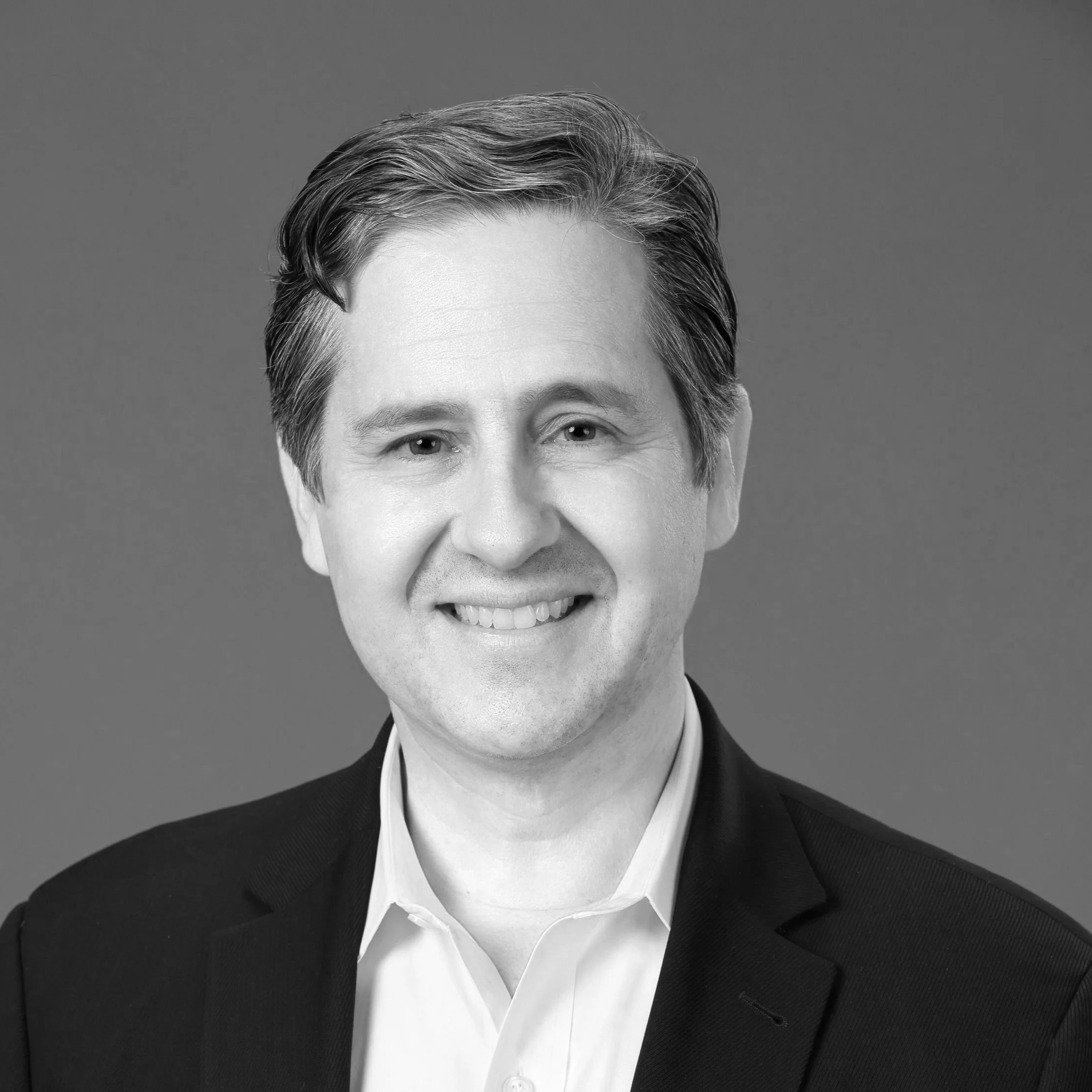 Robert McNally, Founder and President of Rapidan Energy Group and White House energy advisor to President George W. Bush.
Robert (“Bob”) McNally is the founder and president of Rapidan Energy Group. Bob’s 34-year career includes service as a White House energy advisor to President George W. Bush, an oil market analyst, and a hedge fund strategist at Tudor Investment Corporation. His acclaimed book Crude Volatility: The History and the Future of Boom-Bust Oil Prices (Columbia University Press, 2017) received the Honorable Mention in Economics in the 2018 PROSE Awards; the 2023 IAEE Marcel Boiteux Best International Energy Economics Book Award; and the 2024 USAEE Adelman-Frankel Award for unique and innovative contribution to the field of energy economics.
Leading media outlets regularly interview Bob, who frequently testifies before Congress on energy markets and national security. From 2001 to 2003, he served as Special Assistant to the President on the White House National Economic Council and, in 2003, Senior Director for International Energy on the National Security Council.
Bob earned his B.A./B.S. in Political Science and International Relations from American University and his M.A. in International Economics and Foreign Policy from Johns Hopkins School of Advanced International Studies (SAIS).
Dr. Francisco Monaldi
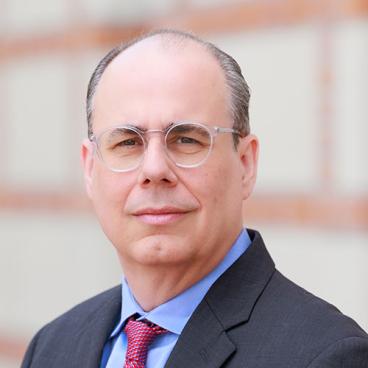 Dr. Francisco Monaldi, Director of the Latin America Energy Program at Rice University’s Baker Institute.
Francisco J. Monaldi, Ph.D., is the Wallace S. Wilson Fellow in Latin American Energy Policy and director of the Latin America Energy Program at the Center for Energy Studies at Rice University’s Baker Institute for Public Policy.
He is also a fellow at the Claudio X. González Center for the United States and Mexico, a lecturer in energy economics at Rice University’s Department of Economics, and a lecturer in energy management at the Jones Graduate School of Business. He is a member of the International Faculty at IESA School of Management in Venezuela and Panama, where he was a professor and the founding director of the Center for Energy and the Environment. He is a nonresident fellow at the Center on Global Energy Policy at Columbia University.
He is a member of the International Advisory Council of Global Americans, the Venezuela Solutions Group of the Atlantic Council, and the Education Advisory Board of the Association of International Energy Negotiators.
Monaldi was previously a visiting professor at the School of Government at the Tecnológico de Monterrey in México; an adjunct senior research scholar at the School of International and Public Affairs at Columbia University; a visiting professor of energy policy at the Harvard Kennedy School of Government; an associate of the Geopolitics of Energy Project and the Roy Family Fellow of the Environment and Natural Resources Program at the Belfer Center for Science and International Affairs; the Robert F. Kennedy Visiting Professor in Latin American Studies at Harvard University; an adjunct professor of international energy policy at the Fletcher School of Law and Diplomacy at Tufts University; a visiting professor of political economy at Stanford University; a national fellow at the Hoover Institution; and a researcher and lecturer in political economy at Universidad Católica Andrés Bello in Caracas. He has also been a visiting lecturer at the Graduate Institute in Geneva, the Universidad de los Andes in Bogotá, and the Universidad ESAN in Lima.
Monaldi is a leading scholar on the politics and economics of energy and resource policy in Latin America. He also studies institutions and resource wealth management in developing countries. He has consulted with numerous international institutions, governments and companies — including the International Monetary Fund, World Bank, Inter-American Development Bank, CAF Development Bank of Latin America, Saudi Aramco, Ecopetrol, PDVSA, PEMEX, Chevron, ExxonMobil, Shell, Total Energies, Equinor, JP Morgan, Barclays, Natural Resource Governance Institute, Harvard Center for International Development, S&P, Rystad, Wood Mackenzie, Eurasia Group, Medley Advisors, and the governments of Norway, the U.K., the U.S., Argentina, Colombia, Ecuador, Mexico, Venezuela, Saudi Arabia, and Kazakhstan.
Monaldi has authored and coauthored numerous academic publications, including “Shale Renders the Obsolescing Bargain Obsolete: Political Risk and Foreign Investment in Argentina’s Vaca Muerta” (Resources Policy, 2021); “The Cyclical Phenomenon of Resource Nationalism in Latin America” in the Oxford Research Encyclopedia (Oxford University Press, 2020); “The Political Economy of Oil Taxation in Latin America” in “The Political Economy of Taxation in Latin America,” G. Flores-Macias, ed. (Cambridge University Press, 2019); “Institutional Collapse” in “Venezuela Before Chavez: Anatomy of an Economic Collapse,” R. Hausmann and F. Rodriguez, eds. (Penn State University Press, 2014); “Oil Fueled Centralism,” in “Oil and Gas in Federal Systems,” G. Anderson, ed. (Oxford University Press, 2012); and “The Political Economy of Oil Contract Renegotiation in Venezuela,” in “The Natural Resources Trap: Private Investment without Public Commitment,” W. Hogan and F. Struzenegger, eds. (MIT Press, 2010).
He holds a Ph.D. and an M.A. in political science (political economy) from Stanford University, an M.A. in international and development economics from Yale University, and a B.A. in economics from Universidad Católica Andrés Bello.
OUR VIRTUAL BRIEFINGS ARE OPEN AND FREE FOR PEOPLE AROUND THE WORLD
Image credit: Photo by Zbynek Burival on Unsplash
We are trying our best to keep our community informed about foreign affairs, and we would appreciate if you can support us to keep this virtual briefing series going. No amount is too small.