How China’s Overcapacity Is Reshaping the World’s Industrial Policy
Virtual Briefing Series
Tuesday, November 10, 2026 | 12:00 PM – 1:00 PM ET
Over the past five years, China’s factories have outgrown what its own economy can absorb, pushing a record trade surplus of roughly $1.2 trillion onto world markets in 2025 and setting off alarms from Washington to Brussels to Brasília. Critics blame China’s state subsidies, weak household spending, and local governments that keep failing firms alive, while Beijing counters that “overcapacity” is a politically loaded term, pointing to the West’s own subsidies, and to the falling cost of the solar panels and batteries the world needs for the energy transition The debate has upended four decades of Western free-market orthodoxy, as governments are increasingly interfering in markets: the United States has moved from the CHIPS and Inflation Reduction Acts to sweeping tariffs and new overcapacity investigations that even target its allies, while the European Union is building “Made in EU” rules and tougher trade defenses. The next front in this contest is advanced technology and AI, where Washington and Beijing are each bringing the full weight of the state to bear.
What really drives China’s overcapacity, and how can we evaluate the merits of each side’s argument? Can the United States and Europe compete without triggering a subsidy race that leaves everyone worse off, and how will this contest reshape global supply chains and the world economy?
Join us on Tuesday, November 10, 2026, from 12:00 to 1:00 PM ET for a conversation with Dr. Kyle Chan, Fellow at the Brookings Institution’s John L. Thornton China Center, Dr. Alicia García-Herrero, Senior Fellow at Bruegel and Chief Economist at French investment bank Natixis; and Jennifer Harris, Director of the Economy and Society Initiative at the Hewlett Foundation and former Special Assistant to the President and Senior Director for International Economics on the National Security Council and National Economic Council.
THIS SESSION IS FREE AND OPEN TO THE PUBLIC
NOT YET A NETWORK 20/20 MEMBER?
Apply today to enjoy exclusive briefings with high-profile speakers.
SPEAKERS:
Dr. Kyle Chan
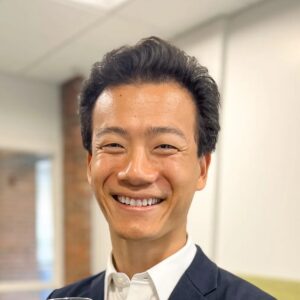
Kyle Chan is a fellow in the John L. Thornton China Center at Brookings. He is an expert on China’s technology development and industrial policy as well as U.S.-China relations.
His research focuses on China’s efforts to use industrial policy to become a global leader in a wide range of critical technologies, including AI, robotics, electric vehicles, batteries, and semiconductors. He has testified as an expert before the U.S. House Select Committee on China and the U.S.-China Economic and Security Review Commission.
His work has been published in peer-reviewed academic journals as well as general audience publications, such as The New York Times, Financial Times, Foreign Affairs, and Foreign Policy.
Chan is frequently quoted in international media outlets, such as The New York Times, Wall Street Journal, BBC, CNBC, Financial Times, The Economist, The Washington Post, Politico, Wired, Le Monde, Nikkei Asia, Neue Zurcher Zeitung, NRC, Australian Broadcasting Corporation, Deutsche Welle, and South China Morning Post.
He is also the author of an influential newsletter on China’s technology and industrial policy called High Capacity and host of the accompanying High Capacity podcast.
Chan received his doctorate from Princeton University and was previously an adjunct researcher with the RAND Corporation. He completed his master’s degree at the London School of Economics and his bachelor’s degree at the University of Chicago. He was born and raised in Los Angeles.
Dr. Alicia García-Herrero
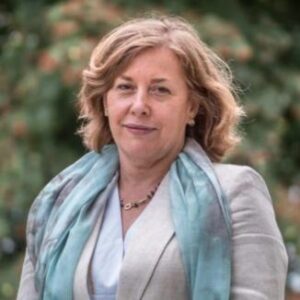
Alicia García Herrero is a Senior Fellow at Bruegel. She specialises in emerging markets, with a particular focus on Asia and Asia-European Union relations. Trade, finance and banking are the topics she covers most regularly.
She speaks English, Spanish, French, German and Italian. She can also converse in Chinese, Japanese and Portuguese.
She is the Chief Economist for Asia Pacific at French investment bank Natixis, a Board Member of AGEAS insurance group, a non-resident Senior Fellow at the East Asian Institute of the National University Singapore and Adjunct Professor at the Hong Kong University of Science and Technology. She is a Member of the Council of the Focused Ultrasound Foundation and an advisor to the Hong Kong Monetary Authority’s research arm. Previously, she was Chief Economist for Emerging Markets at Banco Bilbao Vizcaya Argentaria and Head of the International Economy Division of the Bank of Spain. Alicia has served as visiting Professor at John Hopkins University, China Europe International Business School and Carlos III University. She holds a PhD in Economics from George Washington University.
Jennifer Harris
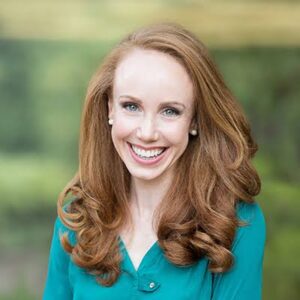
Jennifer M. Harris serves as Director of the Economy and Society Initiative at the William and Flora Hewlett Foundation, which seeks to replace neoliberalism with a new “common sense” about how the economy works and the aims it should serve. Jennifer helped launch the initiative and served as director from 2020 to 2021; she returned to lead the program in 2023.
From 2021 to 2023, Jennifer served as Special Assistant to the President and Senior Director, International Economics on the National Security Council and National Economic Council, where she worked on a host of initiatives and policies,and was a key contributor to the new approach to political economy. After leaving the administration, Jennifer helped stand up BuildUS, a collaborative philanthropic effort to help workers and communities take full advantage of the opportunities made available in new federal legislation, ensuring that the clean energy transition is made real and benefits everyone.
Jennifer has held senior fellowships with the Brookings Institution, the Roosevelt Institute, and at the Council on Foreign Relations (CFR), writing and speaking on international economic issues, U.S. foreign policy, and climate and energy policy. Prior to CFR, she served as a member of Secretary Hillary Clinton’s policy planning staff at the U.S. Department of State. In that role, she was lead architect of Secretary Clinton’s economic statecraft agenda, which launched in 2011.
Jennifer began her career serving on the U.S. National Intelligence Council staff, covering a range of economic and financial issues. Her work has appeared in The New York Times, the Financial Times, Foreign Affairs, The Washington Post, Politico, Bloomberg, and CNN, among other outlets. A Truman and Rhodes scholar, she holds bachelor’s degrees in economics and international relations from Wake Forest University, a master’s degree in philosophy from the University of Oxford, and a law degree from Yale Law School. With Robert Blackwill, she is the co-author of War by Other Means (Harvard/Belknap 2016).
THIS SESSION IS FREE AND OPEN TO THE PUBLIC
NOT YET A NETWORK 20/20 MEMBER?
Apply today to enjoy exclusive briefings with high-profile speakers.