
The Bond Market Strikes Back: New Limits on Sovereign Power?
Virtual Briefing Series
Wednesday, November 4, 2026 | 11:00 AM – 12:00 PM ET
Every government runs on borrowed money. Roads, pensions, armies, and alliance commitments are all paid for by selling bonds to investors at home and abroad. For two decades, low interest rates and central bank support kept that relationship in the background. Now borrowing costs in the United States, the United Kingdom, Japan, and France have climbed to levels not seen in decades, and public debt across advanced economies is at historic highs. Lenders are once again shaping what governments can afford, from defense budgets and NATO spending pledges to industrial policy at home. The question isn’t simply whether yields are rising. It’s whether bond markets have become a real check on how governments spend, defend, and project power.
Is today’s bond market pressure a new constraint on heavily indebted governments, or a familiar market discipline returning after years of easy money? Does the dollar still give Washington room that London, Tokyo, and Paris lack? And which commitments are most exposed if investors start setting the limits?
Join us on Wednesday, November 4, from 11 AM to 12 PM ET for a look into how bond markets are shaping the limits of sovereign power through the experience and analysis of panelists Professor Darrell Duffie, Adams Distinguished Professor of Management and Professor of Finance, Emeritus, at Stanford Graduate School of Business; Professor Barry Eichengreen, Professor of Economics and Political Science at the University of California, Berkeley; and Rebecca Patterson, Senior Fellow at the Council on Foreign Relations’ Greenberg Center for Geoeconomics and former Chief Investment Strategist at Bridgewater Associates.
THIS SESSION IS FREE AND OPEN TO THE PUBLIC
NOT YET A NETWORK 20/20 MEMBER?
Apply today to enjoy exclusive briefings with high-profile speakers.
SPEAKERS:
Professor Darrell Duffie
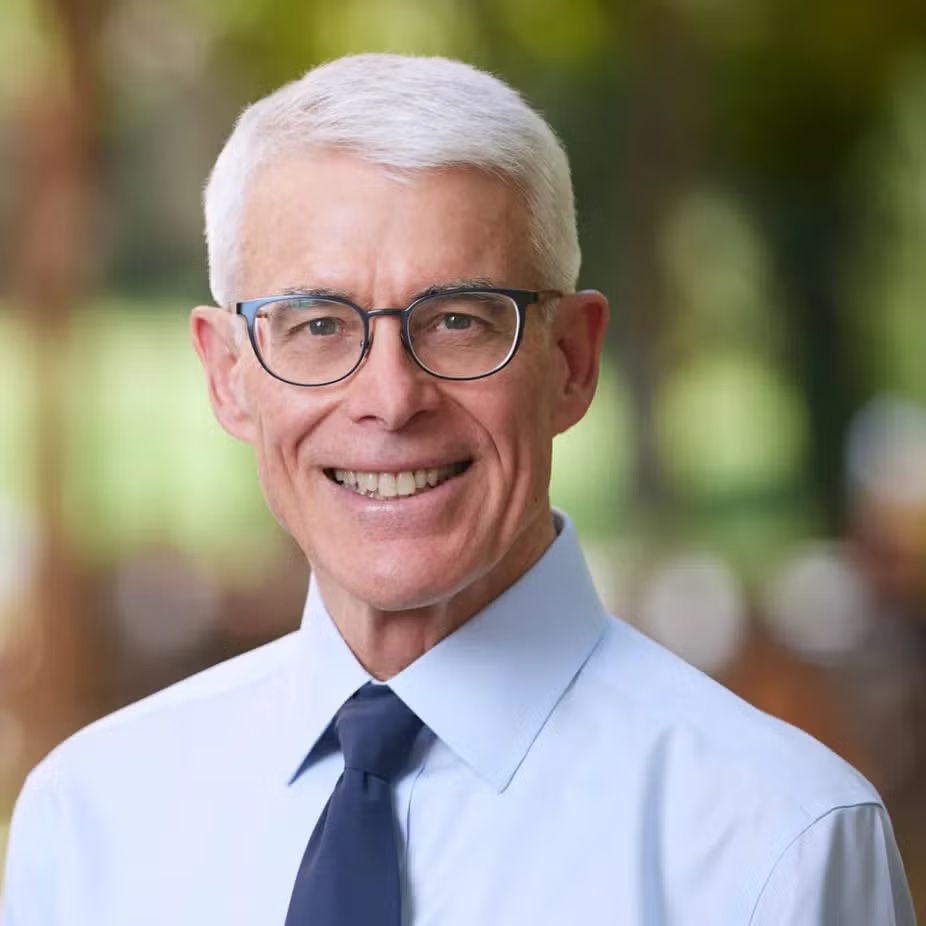
Darrell Duffie is the Adams Distinguished Professor of Management and Professor of Finance, Emeritus, at Stanford University’s Graduate School of Business. He is a Research Fellow of the National Bureau of Economic Research and a Fellow of the American Academy of Arts and Sciences. Duffie is a past president of the American Finance Association and chaired the Financial Stability Board’s Market Participants Group on Reference Rate Reform. He developed Stanford’s course on the Future of Money and Payments. He is an independent director of Dimensional Funds. Duffie presented his research on the size of the Fed’s balance sheet at the Spring 2026 Brookings Papers on Economic Activity. At the Federal Reserve’s 2026 Jackson Hole meeting, Duffie presented his paper on tokenized financial markets. He is an “expert advisor” of the IMF’s Global Financial Stability Report on Tokenization of Financial Assets and is a member of the Treasury Market Practices Group working group on “Digital Innovations and the US Treasury Market.”
Professor Barry Eichengreen
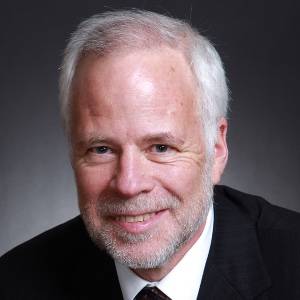
Barry Eichengreen is George C. Pardee and Helen N. Pardee Chair and Distinguished Professor of Economics and Professor of Political Science at the University of California, Berkeley. He is a Research Associate of the National Bureau of Economic Research and Research Fellow of the Centre for Economic Policy Research. In 1997-98 he was Senior Policy Advisor at the International Monetary Fund.
Professor Eichengreen is a fellow of the American Academy of Arts and Sciences (class of 1997). He is a distinguished fellow of the American Economic Association (class of 2022), a corresponding fellow of the British Academy (class of 2022), and a Life Fellow of the Cliometric Society (class of 2013). He has held Guggenheim and Fulbright Fellowships and been a fellow of the Center for Advanced Study in the Behavioral Sciences (Palo Alto) and the Institute for Advanced Study (Berlin). For 15 years from 2004 he served as convener of the Bellagio Group of academics and officials. He is a regular monthly columnist for Project Syndicate.
Professor Eichengreen has been awarded the Economic History Association’s Jonathan R.T. Hughes Prize for Excellence in Teaching and the University of California at Berkeley Social Science Division’s Distinguished Teaching Award. He is the recipient of a doctor honoris causa from the American University in Paris, and was the 2010 recipient of the Schumpeter Prize from the International Schumpeter Society and the 2022 recipient of the Nessim Habif Prize for Contributions to Science and Industry. He was named one of Foreign Policy Magazine’s 100 Leading Global Thinkers in 2011. He is a past president of the Economic History Association (2010-11).
Rebecca Patterson
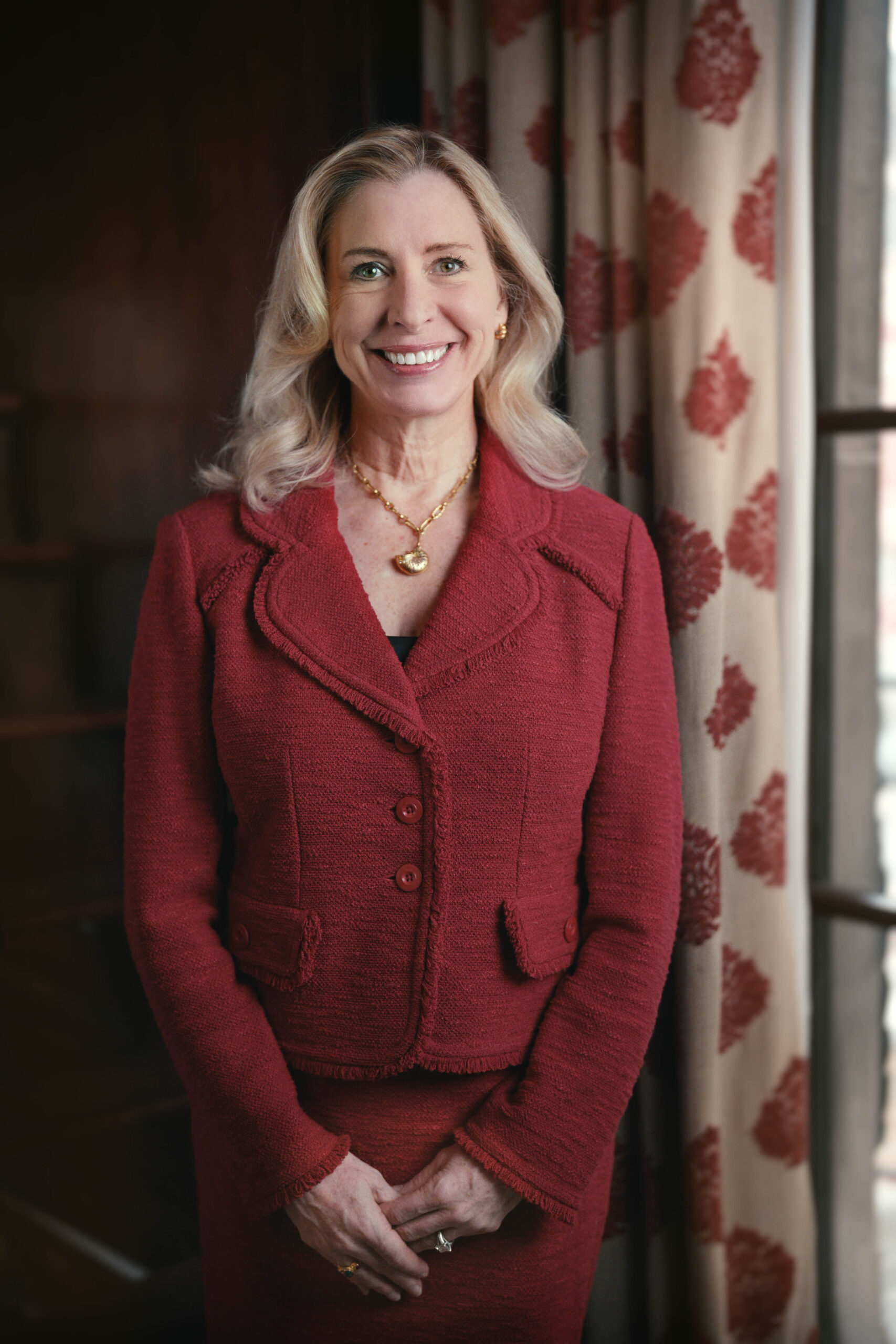
Rebecca Patterson is a senior fellow at the Council on Foreign Relations (CFR). A globally recognized investor and macro-economic researcher with more than twenty-five years of experience across the U.S., Europe, and Asia, Patterson studies how politics and policy intersect with economic trends to drive financial markets.
Patterson is currently an independent director at Vanguard, a global asset manager overseeing more than $10 trillion in assets. She co-hosts a weekly CFR podcast, The Spillover, which examines the ripple effects of global events across policy, geopolitics, economics, technology, and financial markets. Through the Washington Speakers Bureau, she is also a frequently requested speaker on macro-economic and financial market topics, where she provides actionable insights to a wide array of companies and industry organizations.
Previously, Patterson was chief investment strategist for Bridgewater Associates, the world’s largest hedge fund. From 2012 through 2019, Patterson was chief investment officer of Bessemer Trust, a multi-family office where she managed $85 billion in client assets. Before joining Bessemer, Patterson spent more than fifteen years at JPMorgan, where she worked as a researcher in the firm’s investment bank in Europe, Singapore, and the U.S., served as chief investment strategist in the asset management arm of the firm, and ran the Private Bank’s global currency and commodity trading desk. Patterson’s transition to finance came after several years working as a journalist, covering financial markets, policy, and politics in the U.S. and Europe.
In addition to her work with CFR, Patterson has supported the Federal Reserve throughout her career, including serving on the New York Federal Reserve’s Investor Advisory and Foreign Exchange committees. She is a member of the Trilateral Commission and the Economic Club of New York and serves on the University of Florida’s Investment Corporation Advisory Board. She chairs the Council for Economic Education and is a member of the board of the Bretton Woods Committee. Patterson’s insights are frequently sought after by the media; she co-hosted the first-ever television program dedicated to foreign-exchange markets: CNBC’s “Money in Motion.”
Patterson holds a BS in journalism from the University of Florida, an MA in international relations from the Johns Hopkins University School of Advanced International Studies, and an MBA from New York University. She was included in American Banker’s list of “Most Powerful Women in Finance” for six consecutive years and was named to Forbes’ “50 over 50” in 2022.
THIS SESSION IS FREE AND OPEN TO THE PUBLIC
NOT YET A NETWORK 20/20 MEMBER?
Apply today to enjoy exclusive briefings with high-profile speakers.
Image Credit: Pixabay