
Do Rules Matter? Power, Institutions, and Norms In A Disordered World
Thursday, November 5, 2026 | 6:30 PM – 8:30 PM ET
From unilateral military strikes to the redrawing of borders by force, the foundational norms of the post-1945 international order are being tested as rarely before. This is happening at a moment when global challenges, from new technology to climate change, demand coordinated attention. The U.S. president has openly declared that international law does not constrain his actions, while allies hedge their bets and rival powers build institutions of their own outside the U.S.-led system. Amid stalled UN Security Council action on major conflicts and growing skepticism about whether multilateral institutions still matter, a pressing question emerges: do international rules, norms, and institutions still shape state behavior—or are we witnessing their obsolescence?
Do states still argue in the language of international law because it constrains them, or simply because it is a useful cover for power politics? What role can international institutions realistically play when a dominant power openly rejects their authority? And is today’s disorder a temporary disruption, or a genuine transformation of the rules-based order that has governed world politics for eight decades?
Join us for an in-person, members-only conversation on Thursday, November 5, from 6:30 to 8:30 PM, with Professor Ian Johnstone, Professor of International Law at The Fletcher School and former Legal and Policy Official at the United Nations, as we explore whether and how rules, norms, and institutions still matter in an increasingly disordered world.
Fletcher School alumni will join Network 20/20 members for this special event.
THIS SESSION IS FREE FOR NETWORK 20/20’s MEMBERS AND DONORS
NOT YET A NETWORK 20/20 MEMBER?
Apply today to enjoy all exclusive briefings with high-profile speakers
SPEAKER:
Mitchell A. Silk
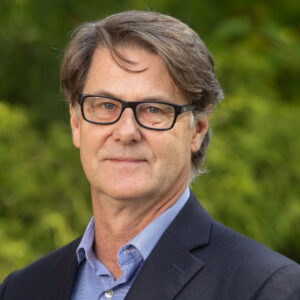 Ian Johnstone is a Professor of International Law at The Fletcher School of Law and Diplomacy at Tufts University. He has been a faculty member since 2000. From 2018 to 2019, he served as Interim Dean. Prior to that from 2013 to 2015, he was the Academic Dean. Before joining Fletcher in 2000, he served in the United Nations’ Executive Office of the Secretary-General. He continues to serve as a regular consultant to the United Nations. His most recent books include “Building an International Cybersecurity Regime: Multistakeholder Diplomacy” (Co-editor, Edward Elgar Publishing, forthcoming 2023); “Talking International Law: Legal Argumentation Outside the Courtroom” (Co-editor, Oxford University Press, 2021); “The Oxford Handbook on International Organizations,” (Co-editor, Oxford University Press, 2016); “Law and Practice of the United Nations, 2nd edition,” (co-author, Oxford University Press, 2016); and “The Power of Deliberation: International Law, Politics and Organizations,” (Oxford University Press, 2011). Selected articles and book chapters include “Global Governance in an Era of Pluralism”, co-author with Joshua Lincoln, Global Policy Journal, Vol. 13:4 (2022); “Empowering One Health Peacemakers”, co-authored with Diana Chigas, Deborah Kochevar and Elizabeth McClintock, Journal of Transnational Peace Praxis, Vol. 4:2 (2022); “Deliberation”, chapter in Jan Klabbers ed, Cambridge Companion to International Organizations Law (Cambridge University Press, 2022); “International Legal Argumentation: Practice in Need of a Theory”, co-author with Steven Ratner, in Ian Johnstone and Steven Ratner eds, Talking International Law: Legal Argumentation Beyond the Courtroom (Oxford University Press, 2021); “Toward a Theory of Legal Argumentation”, co-author with Steven Ratner in Ian Johnstone and Steven Ratner eds, Talking International Law: Legal Argumentation Beyond the Courtroom (Oxford University Press, 2021; “Nuclear non-proliferation law: why argue and to what effect?”, chapter in Ian Johnstone and Steven Ratner eds, Talking International Law: Legal Argumentation Beyond the Courtroom (Oxford University Press, 2021); “Status as a reward in international law”, 115 American Journal of International Law Unbound (2021);. “Louis Sohn’s Legacy,” 31 European Journal of International Law (2020). “The evolution of the United Nations Charter” in Simon Chesterman et al eds., “The Oxford Handbook of UN Treaties,” (Oxford University Press, 2018); “The UN Security Council and International Law” in Sebastian von Einsiedel et al eds., “The United Nations Security Council in the 21st Century,” (2016); “Law-making by International Organizations: Perspectives from International Law/International Relations Theory”, in Jeff Dunoff and Mark Pollack eds “Interdisciplinary Perspectives on International Law and International Relations: The State of the Art,” (2013); and “Legislation and adjudication in the UN Security Council: bringing down the deliberative deficit,” American Journal of International Law (2008). From 2005-2007, he was the lead author and founding editor of the Annual Review of Global Peace Operations. He is currently on the editorial boards of the Canadian Yearbook of International Law and International Organizations Law Review. He has been a Visiting Professor at the New York University School of Law, University of Toronto Faculty of Law, and Jindal Global University, India. He is a Member of the International Advisory Board of the International Peace Institute, New York. Johnstone, recipient of the James L. Paddock Teaching Award in 2005, teaches courses in international organizations and peace operations. A citizen of Canada, he holds an LL.M degree from Columbia University and JD and B.A. degrees from the University of Toronto.
THIS SESSION IS FREE FOR NETWORK 20/20’s MEMBERS AND DONORS
NOT YET A NETWORK 20/20 MEMBER?
Apply today to enjoy all exclusive briefings with high-profile speakers
Image Credit: Image by Mona Tootoonchinia from Pixabay