
Chokepoints: The Hidden Infrastructure of Global Power
Virtual Briefing Series
Tuesday, June 23, 2026 | 2:00 PM – 3:00 PM ET
From the Strait of Hormuz to the international monetary system to the semi-conductor supply chain, the world is becoming increasingly aware of how dependence on critical chokepoints is shaping how countries can wield power and leverage. As diplomacy becomes increasingly transactional and technological and energy systems undergo rapid transformation, understanding these visible and invisible chokepoints is essential to any decision maker.
Is the weaponization of geography becoming the norm? What strategic gains do states expect from exploiting chokepoints? And which mechanisms can prevent the weaponization of chokepoints by states?
Join us on Tuesday, June 23rd from 2 to 3 PM for a discussion that is both timely and timeless, featuring Edward Fishman, Senior Fellow and Director of the Maurice R. Greenberg Center for Geoeconomics at the Council on Foreign Relations and the author of “Chokepoints: American Power in the Age of Economic Warfare,” Professor Monica Hakimi, the William S. Beinecke Professor of Law at Columbia Law School, and Professor James Holmes, the J. C. Wylie Chair of Maritime Strategy at the Naval War College.
THIS SESSION IS FREE AND OPEN TO THE PUBLIC
COULDN’T ATTEND OUR EVENT? Don’t worry. You can watch it below
SPEAKERS:
Edward Fishman
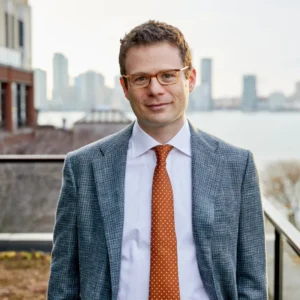 Edward Fishman is senior fellow and director of the Maurice R. Greenberg Center for Geoeconomics at the Council on Foreign Relations (CFR). A leading authority on economic statecraft, Fishman brings experience spanning government service, the technology industry, media, and academia. His New York Times–bestselling book, Chokepoints: American Power in the Age of Economic Warfare, was named a best book of 2025 by the Economist, the Financial Times, Bloomberg, and NPR and was a finalist for the Financial Times Business Book of the Year Award. It is being translated into more than half a dozen languages.
Between 2011 and 2017, Fishman served in a number of foreign policy roles across the U.S. government. At the State Department, he served as a member of the Secretary of State’s Policy Planning Staff, where he advised Secretary John Kerry on Europe and Eurasia and led the staff’s work on economic sanctions, long-range strategic planning, and international order and norms. Fishman was also the Russia and Europe lead in the State Department’s Office of Economic Sanctions Policy and Implementation, where he played a central role in designing and negotiating international sanctions in response to Russia’s aggression in Ukraine. Earlier, he served on the Iran sanctions team, where he developed policies to strengthen sanctions against Iran and maintain pressure during the international nuclear negotiations. Additionally, Fishman served at the Pentagon as special assistant to the chairman of the Joint Chiefs of Staff and at the Treasury Department as special assistant to the undersecretary for terrorism and financial intelligence. He has received the State Department’s Superior Honor Award (twice) and its Meritorious Honor Award, having been recognized for his contributions to U.S. policy toward Ukraine, Russia, Belarus, and Iran.
In the private sector, Fishman has worked in operating roles at several high-growth technology companies, including Via and Zoox. At Via, he built and managed the company’s health transportation business, which provides software and services to public agencies and health-care systems to increase access to care among underserved communities. He also led initiatives to commercialize autonomous vehicles and integrate them into public transit systems. Fishman actively invests in and advises mission-driven, early-stage technology companies that aim to improve American society and advance U.S. national interests.
Fishman teaches courses on economic statecraft and geoeconomics at Columbia University, where he is an adjunct professor of international and public affairs and a senior research scholar at the Center on Global Energy Policy.
Fishman began his career as an editor at Foreign Affairs. His writings have appeared in the New York Times, the Wall Street Journal, the Washington Post, the Financial Times, Foreign Affairs, Politico, Boston Review, and other outlets, and he appears regularly as an expert commentator on leading television and radio programs.
A native of Bryn Mawr, Pennsylvania, Fishman holds a BA in history from Yale University, an MPhil in international relations from the University of Cambridge, and an MBA from Stanford University. He lives in New York with his wife and children.
Professor Monica Hakimi
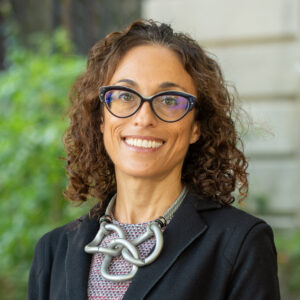 Monica Hakimi is the William S. Beinecke Professor of Law at Columbia Law School and one of the preeminent scholars of international law of her generation. She recently completed a term as Co-Editor-in-Chief of the American Journal of International Law, the leading peer-reviewed journal in the field. She is also the recipient of the 2024 Humboldt Research Award, one of Germany’s most distinguished honors for scholars outside of Germany, awarded annually to a small set of researchers to recognize their outstanding contributions to their fields.
Hakimi’s scholarship draws on both legal doctrine and theory to ask foundational questions about international law — how it operates, what purposes it serves, and how it should be understood on its own terms. Her work spans different areas of public international law, including the use of force, humanitarian law, and human rights law. It has appeared in the American Journal of International Law, the Harvard International Law Journal, the Michigan Law Review, the Yale Journal of International Law, and the European Journal of International Law, among other venues. Several of her articles have been selected as featured pieces accompanied by invited responses from prominent scholars, a distinction that reflects the significance and originality of the contributions.
Her major theoretical project challenges the widely held assumption that international law exists primarily to enable cooperation. Across a series of articles, Hakimi has argued that international law operates through conflict and contestation as much as it does through cooperation, and that a clear-eyed account of the field requires abandoning conventional assumptions about law’s role in the international order.
Hakimi has also been one of the most prominent scholarly voices on the geopolitical crises of the present moment. Her co-authored article “Russia, Ukraine, and the Future World Order” was among the first major scholarly engagements with Russia’s invasion and has received considerable attention among scholars, government officials, and policymakers. Her subsequent work — on the prohibition of the annexation of territory, the decline in U.S. support for international law, and the global crisis in governance authority — addresses questions of the first order of importance for the future of the field.
In addition to her research, Hakimi is co-author (with Jeffrey L. Dunoff and Steven R. Ratner) of International Law: Norms, Actors, Process: A Problem-Oriented Approach (6th ed. 2025), one of the most widely used international law casebooks in American legal education. She is an Adviser to the American Law Institute’s Restatement (Fourth) of U.S. Foreign Relations Law and serves on the Advisory Board of the Max Planck Encyclopedia of International Law and on the U.S. Department of State Advisory Committee on International Law.
Before joining Columbia, Hakimi was the James V. Campbell Professor of Law at the University of Michigan Law School, where she served as Associate Dean for Faculty and Research and Associate Dean for Academic Programming. She has held visiting and research appointments at the KFG Berlin-Potsdam Research Group, Interdisciplinary Center Herzliya, the University of Tokyo, and Benjamin N. Cardozo School of Law.
Prior to entering the academy, Hakimi served for four years as an Attorney-Adviser in the Office of the Legal Adviser at the U.S. Department of State, working on issues relating to state responsibility, nuclear nonproliferation, international investment disputes, and international civil aviation. She clerked for Judge Kimba M. Wood on the U.S. District Court for the Southern District of New York.
Hakimi received her B.A. summa cum laude from Duke University and her J.D. from Yale Law School.
Professor James Holmes
 James Holmes is a professor of strategy, the inaugural holder of the J. C. Wylie Chair of Maritime Strategy, a visiting professor in the Fleet Seminar Program, and a two-time visiting professor of national security affairs at the Naval War College. He is a recipient of the Navy Meritorious Civilian Service Medal honoring his research and writing. He previously served on the faculty of the University of Georgia School of Public and International Affairs, Center for International Trade and Security, where he remains a Faculty Fellow. He is a Distinguished Fellow at the Brute Krulak Center for Innovation & Future Warfare, Marine Corps University. A former U.S. Navy surface-warfare officer and combat veteran of the first Gulf War, he served as a weapons and engineering officer in the battleship Wisconsin, engineering and firefighting instructor at the Surface Warfare Officers School Command, and military professor of strategy at the Naval War College. He is the last gunnery officer in history to fire a battleship’s big guns in anger.
Jim is a Phi Beta Kappa graduate of Vanderbilt University (B.A., mathematics and German) and completed graduate work at Salve Regina University (M.A., international relations), Providence College (M.A., mathematics), and the Fletcher School of Law and Diplomacy at Tufts University (M.A.L.D. and Ph.D., international affairs), where he was named the A. Eiken Hohenberg Scholar. He was the first recipient of the Naval War College Foundation Award, signifying the top graduate in his Naval War College class.
His most recent books are Red Star over the Pacific (third edition), Habits of Highly Effective Maritime Strategists, and A Brief Guide to Maritime Strategy. Habits of Highly Effective Maritime Strategists was a nominee for the U.K. Maritime Foundation’s Mountbatten Award for Best Book of 2022. A Brief Guide to Maritime Strategy was first named to the Navy Professional Reading List in 2020 and was recently named to the 2025 edition of the list. It was named a Naval Review Book of the Quarter and translated into Japanese and Korean. It was the top recommendation among 49 works on the University of Washington Naval Science Professional Reading List. The first edition of Red Star over the Pacific was designated an Atlantic Monthly Best Book of the Year and named to the 2012 Navy Professional Reading List as Essential Reading. As such copies were placed aboard every major ship, squadron, and shore installation in the U.S. Navy. Translations appeared through the Chinese Academy of Social Sciences, Beijing, along with houses in Japan, South Korea, Germany, and Taiwan. The second edition was named to the 2019 and 2024 Navy Professional Reading Lists and has also appeared on the U.S. Marine Corps and U.S. Indo-Pacific Command Professional Reading Lists. It was recommended fourth among 49 works on the University of Washington Naval Science Professional Reading List. The third edition came with endorsements from a former commander of the U.S. Indo-Pacific Command, Admiral Phil Davidson, and a former commander of the U.S. Pacific Fleet, Admiral Scott Swift.
THIS SESSION IS FREE AND OPEN TO THE PUBLIC
NOT YET A NETWORK 20/20 MEMBER?
Apply today to enjoy all exclusive briefings with high-profile speakers