
Taiwan’s Role in the U.S. High-Tech Supply Chain: Opportunities and Challenges
In-person, Members-only Briefing
Monday, April 6, 2026 | 6:30 PM – 8:00 PM ET
Taiwan sits at the center of the world’s most critical high-tech supply chains, producing more than half of the world’s semiconductors, nearly all of the most advanced chips, and assembling 90% of global AI servers. As supply chains face growing geopolitical shocks and China accelerates its technological ambitions, Taiwan’s security is of increasing economic and strategic importance for the U.S. Where does Taiwan sit in the U.S. high-tech supply chain, of semiconductors, AI hardware, and advanced manufacturing? What are the opportunities and challenges in U.S.-Taiwan cooperation? What risks do China’s technological ambitions pose to the U.S. high-tech supply chain and how can the U.S. and Taiwan work together to address them? What would resilience look like in practice and how can U.S.–Taiwan cooperation reduce risk without slowing innovation?
Join us in-person on Monday, April 6, 6:30 to 8:00 PM, for a discussion with Stephen Ezell, Vice President for global innovation policy at the Information Technology and Innovation Foundation (ITIF) and Director of ITIF’s Center for Life Sciences Innovation; Dr. Roselyn Hsueh, Professor of Political Science at Temple University & Non-resident Senior Fellow, DSET (Taiwan), and Dr. Adam Segal, Ira A. Lipman Chair in Emerging Technologies and National Security and Director of the Digital and Cyberspace Policy program at the Council on Foreign Relations. This discussion will be moderated by David Sacks, Fellow for Asia Studies at the Council on Foreign Relations. Together, they will discuss Taiwan’s role in the U.S. high-tech ecosystem and examine how U.S.–Taiwan relations impact supply-chain resilience amid intensifying U.S.–China competition.
The event is co-hosted by Network 20/20 and the Taipei Economic and Cultural Office In New York.
COULDN’T ATTEND OUR EVENT? Don’t worry. You can watch it below
NOT YET A NETWORK 20/20 MEMBER?
Apply today to enjoy all exclusive briefings with high-profile speakers
SPEAKERS:
Stephen Ezell
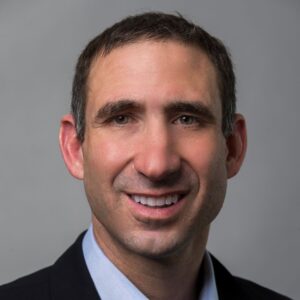 Stephen Ezell is vice president for global innovation policy at the Information Technology and Innovation Foundation (ITIF) and director of ITIF’s Center for Life Sciences Innovation. He also leads the Global Trade and Innovation Policy Alliance. His areas of expertise include science and technology policy, international competitiveness, trade, and manufacturing.
Ezell is the coauthor of Innovating in a Service-Driven Economy: Insights, Application, and Practice (Palgrave Macmillan, 2015) and Innovation Economics: The Race for Global Advantage (Yale, 2012).
Ezell came to ITIF from Peer Insight, an innovation research and consulting firm he cofounded in 2003 to study the practice of innovation in service industries. At Peer Insight, Ezell led the Global Service Innovation Consortium, published multiple research papers on service innovation, and researched national service innovation policies being implemented by governments worldwide.
Prior to forming Peer Insight, Ezell worked in the New Service Development group at the NASDAQ Stock Market, where he spearheaded the creation of the NASDAQ Market Intelligence Desk and the NASDAQ Corporate Services Network, services for NASDAQ-listed corporations. Previously, Ezell cofounded two successful innovation ventures, the high-tech services firm Brivo Systems and Lynx Capital, a boutique investment bank.
Ezell holds a B.S. from the School of Foreign Service at Georgetown University, with an honors certificate from Georgetown’s Landegger International Business Diplomacy program.
Dr. Roselyn Hsueh
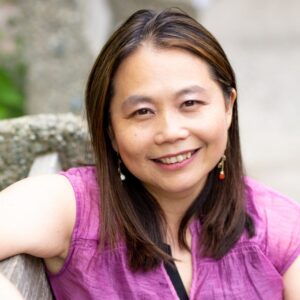 Dr. Roselyn Hsueh is a Professor of Political Science at Temple University, where she co-directs the Certificate Program in Political Economy. She is the founding director of the Economies and Identities Lab. She recently served as a Visiting Scholar at the Berkeley Economy and Society Initiative in 2024-2025. She is the author of Micro-Institutional Foundations of Capitalism: Sectoral Pathways to Globalization in China, India, and Russia (Cambridge University Press, 2022)(press and reviews), China’s Regulatory State: A New Strategy for Globalization (Cornell University Press, 2011)(press and reviews), and scholarly articles and book chapters on states and markets, industrial policy, comparative regulation and governance, and development and globalization. Various peer-reviewed journals, including Comparative Political Studies, Governance, Perspectives on Politics, and Review of Policy Research, have published her work. Her 2025 Perspectives on Politics article (first view) advances the “contextualized comparative sector approach” and introduces the “bringing the sector back in” research agenda to study the new political economy.
Her research shows the leverage of taking a comparative and multilevel (country, sector, subsector, and time) approach in examining the multidimensional effects of sectors in interaction with state and non-state actors in the domestic and global political economy. In particular, she developed the Strategic Value Framework based on the multilevel examination of the structural, institutional, and value-laden dimensions of sectors in order to understand the role of the state in market coordination and property rights arrangements, and has applied it to examine market reform, industrial policy, economic statecraft, and trade and investment across sectors and subsectors in China and East Asia (Japan, South Korea, and Taiwan), India, and Russia. Her work on China is the first to identify China’s strategic use of markets and levels of state control across industrial sectors to enhance the national technology base and global competitiveness and achieve political consolidation, with varying success and economic and political consequences.
Professor Hsueh is a frequent commentator on international politics, finance and trade, and comparative economic development. BBC World News, The Economist, Foreign Affairs, Foreign Policy, National Public Radio, Nikkei, The New York Times, The Washington Post, and other media outlets have featured her expert analysis. She has testified before the U.S.-China Economic and Security Review Commission and consulted for The Center for Strategic and International Studies and The National Bureau of Asian Research. She has served as a Global Order Visiting Scholar at the University of Pennsylvania, member of the Georgetown Initiative for U.S.-China Dialogue on Global Issues, and IEAS Residential Research Faculty Fellow and Visiting Scholar at Berkeley Law’s Center for Law and Society. She has lectured as a Visiting Professor at Tecnológico de Monterrey in Mexico and held the Taiwan Fellowship as a visiting professor at the National Taiwan University. She served as a Fulbright Visiting Scholar at the Institute of World Economics and Politics, Chinese Academy of Social Sciences. She is a two-time recipient of the Fulbright fellowship, including the trans-regional and multi-country Fulbright Global Scholar Award, and held other prestigious fellowships for research and international fieldwork. She held the Hayward R. Alker Postdoctoral Fellowship at the University of Southern California. She earned her B.A. and Ph.D. in Political Science from the University of California, Berkeley.
Dr. Adam Segal/span>
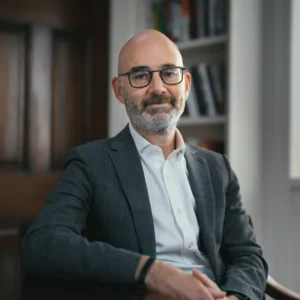 Adam Segal is the Ira A. Lipman chair in emerging technologies and national security and director of the Digital and Cyberspace Policy program at the Council on Foreign Relations (CFR). An expert on security issues, technology development, and Chinese domestic and foreign policy, Segal was the project director for the CFR-sponsored Independent Task Force reports Confronting Reality in Cyberspace, Innovation and National Security, Defending an Open, Global, Secure, and Resilient Internet, and Chinese Military Power. His book The Hacked World Order: How Nations Fight, Trade, Maneuver, and Manipulate in the Digital Age (PublicAffairs, 2016) describes the increasingly contentious geopolitics of cyberspace. His work has appeared in the Financial Times, the New York Times, Foreign Policy, the Wall Street Journal, and Foreign Affairs, among others. He currently writes for the blog, “Net Politics.”
From April 2023 to June 2024, Segal was a senior advisor in the State Department’s Bureau of Cyberspace and Digital Policy, where he led the development of the United States International Cyberspace and Digital Policy. For this work, he was awarded the 2025 International Policy Impact Award by the Center for Cybersecurity, Policy, and Law. Before coming to CFR, Segal was an arms control analyst for the China Project at the Union of Concerned Scientists. There, he wrote about missile defense, nuclear weapons, and Asian security issues. He has been a visiting scholar at the Hoover Institution at Stanford University, the Massachusetts Institute of Technology’s Center for International Studies, the Shanghai Academy of Social Sciences, and Tsinghua University in Beijing. He has taught at Vassar College and Columbia University. Segal is the author of Advantage: How American Innovation Can Overcome the Asian Challenge (W.W. Norton, 2011) and Digital Dragon: High-Technology Enterprises in China (Cornell University Press, 2003), as well as several articles and book chapters on Chinese technology policy.
Segal has a BA and PhD in government from Cornell University, and an MA in international relations from the Fletcher School of Law and Diplomacy, Tufts University
MODERATOR:
David Sacks
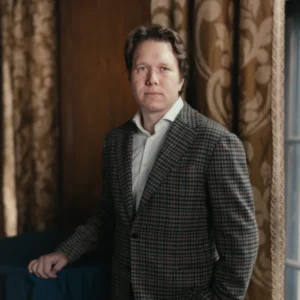 David Sacks is a fellow for Asia studies at the Council on Foreign Relations (CFR), where his work focuses on U.S.-China relations, U.S.-Taiwan relations, Chinese foreign policy, cross-Strait relations, and the political thought of Hans Morgenthau. His biography of Hans Morgenthau, The Realist: Hans Morgenthau and the Purpose of American Power, is set to be published by Henry Holt & Company in November 2026. In 2023, Mr. Sacks served as the project director for CFR’s Independent Task Force on U.S.-Taiwan Relations, which was chaired by Admiral (ret.) Michael G. Mullen and Susan M. Gordon. He also co-directed CFR’s Independent Task Force on China’s Belt and Road Initiative, which was chaired by Jacob J. Lew and Admiral (ret.) Gary Roughead. He is a regular commentator on U.S.-Taiwan and cross-Strait relations. His writings have appeared in Foreign Affairs, The National Interest, Time, The Diplomat, The Hill, and the Georgetown Journal of International Affairs.
Prior to joining CFR, Mr. Sacks worked on political military affairs at the American Institute in Taiwan, which handles the full breadth of the United States’ relationship with Taiwan in the absence of diplomatic ties. Mr. Sacks was also a Princeton in Asia fellow in Hangzhou, China. He received his M.A. in International Relations and International Economics, with honors, from the Johns Hopkins School of Advanced International Studies (SAIS). At SAIS, he was the recipient of the A. Doak Barnett Award, given annually to the most distinguished China Studies graduate. Mr. Sacks received his B.A. in Political Science, Magna Cum Laude, from Carleton College.
THIS SESSION IS FREE FOR NETWORK 20/20’s MEMBERS
NOT YET A NETWORK 20/20 MEMBER?
Apply today to enjoy all exclusive briefings with high-profile speakers
*Image Credit: Photo by Igor Omilaev on Unsplash
We are trying our best to keep our community informed about foreign affairs, and we would appreciate if you can support us to keep this virtual briefing series going. No amount is too small.